
The Khajuraho Temples, located in the Chhatarpur district of Madhya Pradesh, India, are a group of magnificent temples renowned for their intricate sculptures, artistic brilliance, and historical significance. These temples are a UNESCO World Heritage Site and are celebrated for their blend of spirituality, art, and architecture.
Overview of Khajuraho Temples
- Location: Khajuraho, Madhya Pradesh, India.
- Era: Built between 950–1050 CE during the reign of the Chandela dynasty.
- Significance: Known for their exceptional Nagara-style architecture and carvings, these temples reflect themes of spirituality, love, and human relationships.
- Religion: These temples are dedicated to Hinduism and Jainism.
Historical Background
- Chandela Dynasty:
- The temples were commissioned by the rulers of the Chandela dynasty, who were great patrons of art and architecture.
- The construction of these temples began around 950 CE and continued until 1050 CE.
- Decline and Rediscovery:
- Over time, the region fell into obscurity, and the temples were partially hidden by dense forest.
- They were rediscovered in the 19th century by British archaeologist T.S. Burt in 1838.
Architectural Features
- Nagara Style:
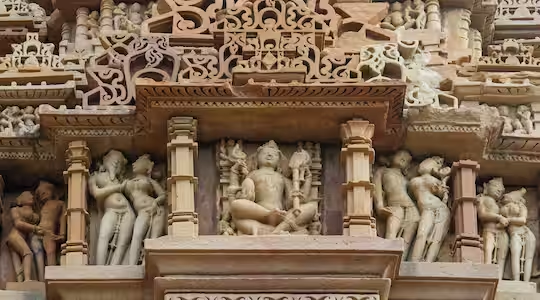
- The temples follow the Nagara style of North Indian temple architecture, characterized by tall shikharas (spires) and intricate carvings.
- Temple Layout:
- The temples are built on raised platforms and consist of the mandapa (entrance hall), garbhagriha (sanctum), and antarala (vestibule).
- Sculptures:
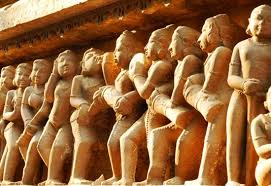
- The temples are adorned with exquisite carvings depicting gods, goddesses, celestial beings, animals, musicians, dancers, and scenes from everyday life.
- Erotic Sculptures: A distinctive feature is the portrayal of erotic art, symbolizing the harmony of human desires and spirituality.
- Materials:
- The temples are constructed using sandstone, and the joints are held together by mortise and tenon joints without the use of mortar.